The igaming space consistently attracts below-average development talent while simultaneously building systems that handle significant flows of real money and cryptocurrency. The result is a sector riddled with security vulnerabilities that would be considered unacceptable in any other financial services context.
The Core Problem
The problem isn’t just that vulnerabilities exist – it’s that basic security practices standard in other financial software contexts are routinely absent from gambling platforms. Developers who would be considered juniors in most other contexts are building and maintaining systems that process millions in transactions daily.
The underlying cause is largely economic. Cryptocasino sites can be spun up quickly and cheaply, particularly using existing white-label infrastructure or by hiring low-cost developers. The incentive to cut corners on security is high, especially for newer sites operating on thin margins or, in some cases, no legitimate financial foundation at all. The people with the skills to build these systems properly are rarely attracted to the igaming space, and the people who do end up building them often lack the security awareness to know what they’re missing.
Vulnerabilities Commonly Found Across Online Casinos
ReDoS (Regular Expression Denial of Service)
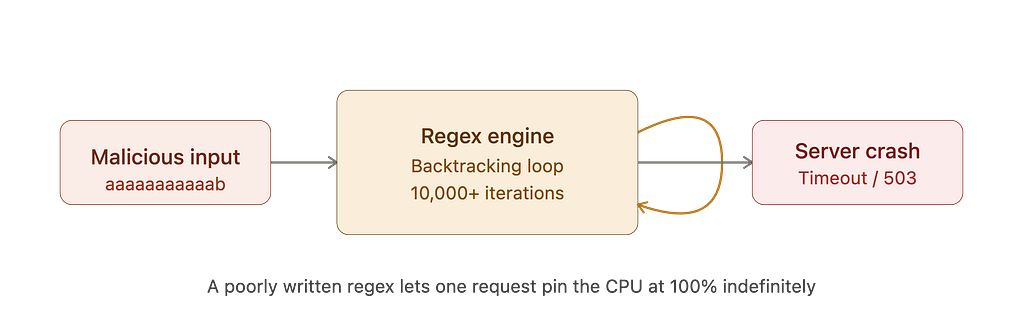
One of the more elementary classes of web vulnerability, ReDoS occurs where a poorly constructed regular expression in an input field can be exploited to crash a server. The fact that this class of vulnerability appears repeatedly on live gambling sites handling real money illustrates the baseline level of security practice across parts of the industry. It is the kind of bug that would be caught immediately in a competent code review – which tells you something about whether competent code reviews are happening.
Input Field Character Limits
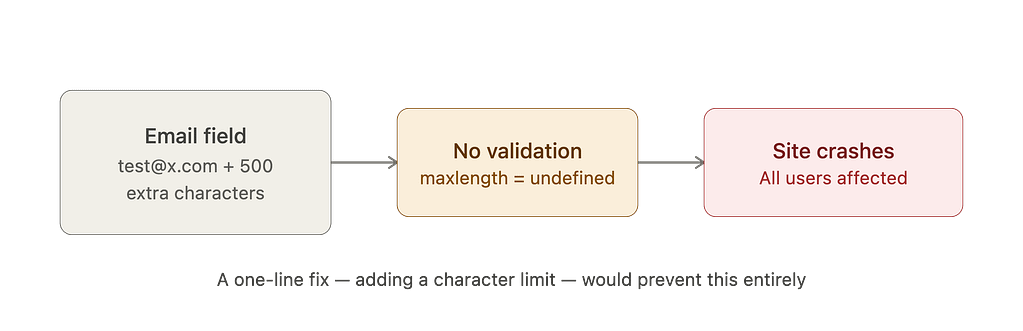
A related and similarly basic issue is the near-universal absence of proper input validation on newer casino sites. A specific technique that circulates among security researchers involves entering an extremely long string in an email field during signup – something like a standard email address followed by hundreds of characters – which causes the entire site to crash. It is among the most elementary possible attacks, and yet it works repeatedly across multiple platforms. The fix is trivial. The fact that it needs fixing at all on a site handling financial transactions indicates that even basic security testing is not being done before launch.
IDOR (Insecure Direct Object Reference)
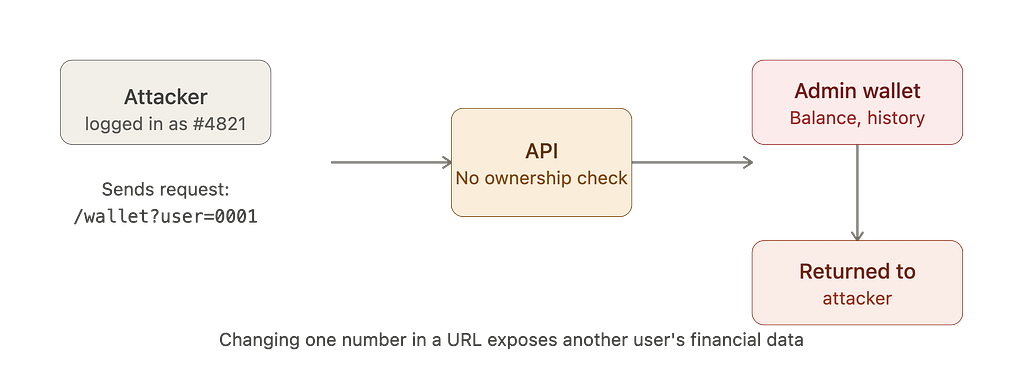
IDOR vulnerabilities occur when an attacker can access data or functionality they shouldn’t have by manipulating references to objects – such as user IDs, account numbers, or transaction references – in requests. In most web contexts this is a moderate severity issue. In a gambling platform where those objects might include wallet addresses, withdrawal requests, or account balances, the potential severity is significantly higher. IDOR vulnerabilities have been found and reported on multiple gambling platforms, with fixes that are sometimes incomplete – patching the specific reported instance without addressing the underlying pattern.
Origin Mismatch / CORS Misconfiguration
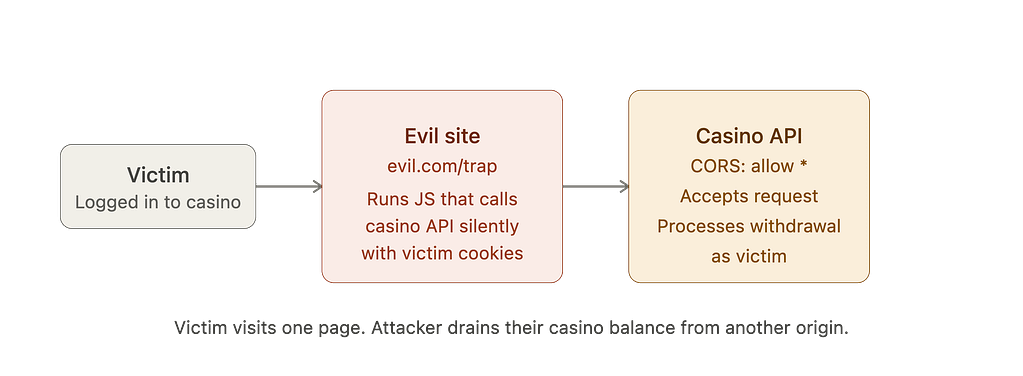
CORS (Cross-Origin Resource Sharing) misconfigurations allow attackers to make requests to a site’s API on behalf of authenticated users from an origin the site should be rejecting. In practice this can enable account takeover or unauthorised transactions. What makes this particularly notable in the gambling context is not just that the vulnerability exists, but that when researchers report it – including in cases where they demonstrate the issue by sending an administrator their own authentication token – the development team sometimes fails to understand what they’re being shown. The vulnerability gets patched eventually, but the response time and comprehension level involved raises questions about what else exists in the codebase that no one has thought to look for.
Race Conditions
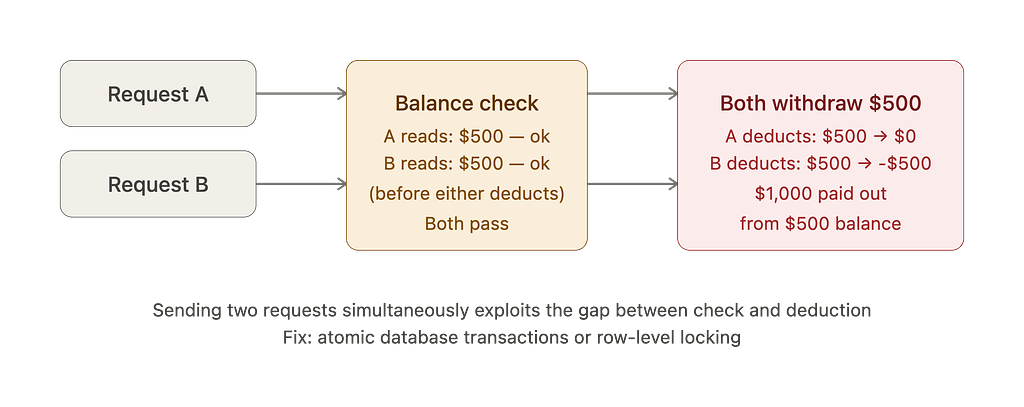
Race conditions occur where the outcome of an operation depends on the timing of multiple simultaneous requests in a way the developer didn’t anticipate. In gambling platforms they most commonly appear in reward systems, withdrawal processing, and balance updates. They can sometimes be exploited to claim bonuses multiple times, process withdrawals against funds that have already been spent, or manipulate leaderboard positions. They are notoriously difficult to detect through standard testing because they only manifest under specific timing conditions – which means they often survive into production even on platforms that do some level of security testing.
Infinite Balance Exploits
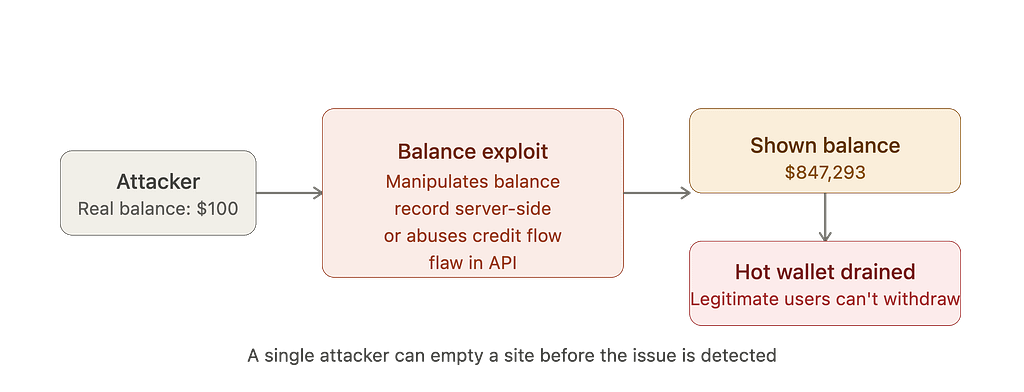
The most severe class of vulnerability in this context involves flaws that allow balance manipulation – either generating funds that don’t exist or withdrawing funds in excess of actual account balance. These vulnerabilities, when they exist, represent existential risks to a platform’s financial stability. A single sophisticated attacker exploiting an infinite balance vulnerability could theoretically drain a site’s hot wallet entirely before the issue is detected. Platforms that have been exploited in this way may face liquidity problems that affect their ability to pay out legitimate withdrawals – a dynamic that likely underlies some of the withdrawal failures that periodically surface across the industry.
The problems described above play out in real time more often than the industry admits. A recent example saw a researcher publicly disclose a one-click account takeover vulnerability on Gamdom after being offered just $500 for a flaw that could have compromised any user’s account. Read the full story here: Gamdom Security Flaw Exposed
Bug Bounties: Broken or Nonexistent
Across the igaming space, formal bug bounty programs are either absent entirely or present in name only. Researchers who find and responsibly disclose vulnerabilities frequently report being offered inadequate compensation, having bounty promises go unfulfilled, or – in the most egregious cases – losing money as a result of responsible disclosure when sites retain deposited funds under various pretexts while paying out less than the researcher spent identifying the issue.
This has a predictable downstream effect. Security researchers with the skills to find these vulnerabilities have little financial incentive to report them responsibly. The realistic alternatives – exploiting them quietly, selling them to third parties, or simply ignoring gambling sites as a research target – are all worse outcomes for the platforms and their users than a functional bug bounty program would produce. The sites that most need external security scrutiny are the least equipped to incentivise it.
The contrast with mature financial services is stark. Banks, payment processors, and established fintech companies typically run structured vulnerability disclosure programs with clearly defined scope, response timelines, and compensation scales. The igaming industry has no equivalent standard, and individual platform programs where they exist tend to be ad hoc and poorly administered.