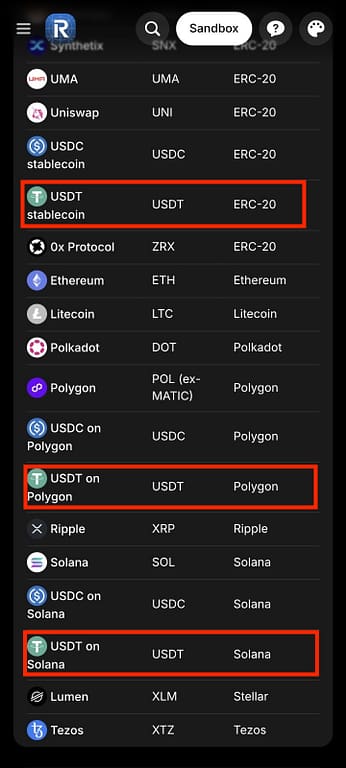
Customers have until 31 August 2026 to sell or withdraw their Tether holdings before Revolut automatically converts remaining balances to cash
Revolut has begun notifying customers that it will remove Tether (USDT) from its crypto platform later this year.
What’s Changing
According to a notice sent to account holders, Revolut will phase out USDT support on a staggered timeline:
- From 30 July 2026, 12:00 PM GMT – Revolut will stop accepting new USDT deposits. Any deposits sent in before this cutoff will still be credited once they clear standard checks.
- From 6 July 2026, 12:00 PM GMT – Customers will no longer be able to buy USDT on the platform.
- Until 31 August 2026, 12:00 PM GMT – Existing holders can sell their USDT or withdraw it to an external crypto wallet, subject to daily transaction limits.
- After 31 August 2026 – Any USDT still sitting in a Revolut account will be automatically converted into the customer’s base currency at that day’s exchange rate, with funds credited to their main balance within seven business days. Withdrawals and deposits will no longer be supported at all from this point.
Customers whose remaining USDT balance falls below the smallest tradeable unit of their base currency (for example, less than €0.01 worth) won’t need to take action – Revolut says it will auto-liquidate these dust balances and credit the account automatically.
Why Revolut Is Delisting USDT
Revolut has framed the move as part of routine platform housekeeping, saying it “regularly reviews the tokens available” on its exchange and adjusts its offering based on “regulatory and risk considerations.” The company has not named a single decisive factor, but the timing lines up with a broader pattern across European exchanges.
Under the EU’s Markets in Crypto-Assets (MiCA) regulation, stablecoin issuers must meet strict reserve, disclosure, and authorisation requirements to keep their tokens listed on platforms serving EU customers. Tether, USDT’s issuer, has been notably reluctant to pursue full MiCA compliance, and several major exchanges – including Binance and OKX – moved to restrict or delist USDT for EU users during the initial MiCA rollout in past years. Revolut’s delisting notice fits that same regulatory pressure, according to Revolut’s own published delisting criteria, which lists regulatory violations, insufficient liquidity, low token value, and reputational risk as grounds for removing an asset.
Past Issues
The delisting arrives against a backdrop of long-running customer frustration with how Revolut handles crypto transactions. Complaints on forums like Reddit’s r/Revolut have described lengthy delays clearing large USDT deposits, with one widely discussed case involving a customer whose five-figure USDT deposit remained frozen for roughly seven weeks before Revolut ultimately returned the funds to the customer’s external wallet. Users in that thread pointed to Revolut’s anti-money-laundering checks and its cautious approach to crypto more broadly as recurring friction points, with some describing the bank’s crypto support as inconsistent compared with dedicated exchanges.
The frozen five-figure USDT deposit mentioned above isn’t an isolated case – it’s part of a broader pattern with crypto casino withdrawals specifically. See our detailed guide on why these get blocked or frozen and how to get them moving
What Customers Should Do
Revolut customers holding USDT have three options before the end of August:
- Sell USDT in-app – via Crypto → USDT → Sell, subject to daily limits.
- Withdraw to an external wallet – standard crypto withdrawal limits apply, and larger balances may require multiple transactions.
- Do nothing – Revolut will automatically convert any remaining balance to cash at prevailing market rates after the 31 August deadline, though this means giving up control over the timing and rate of conversion.
Revolut has stated it is not liable for losses arising from a delisted token’s value falling to zero, per the terms outlined in its crypto terms and conditions – a point worth noting for customers who may be tempted to wait out the deadline rather than act.
Revolut has not disclosed how many customers or how much total USDT value is affected by the delisting.