Stake Engine, the game development arm of the Stake crypto casino platform, has quietly introduced two significant rule changes for indie game developers in recent weeks — and according to sources, Pragmatic Play is the driving force behind them.
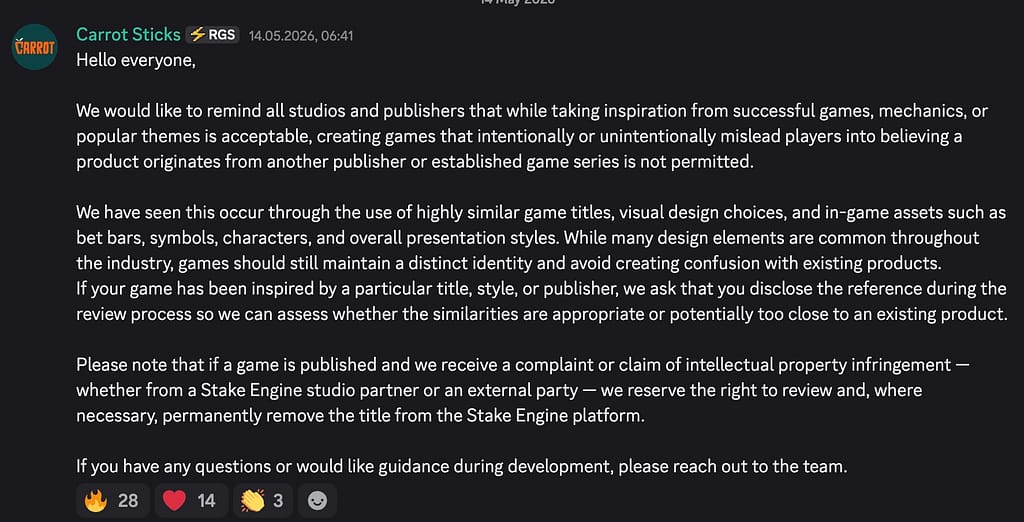
The first change, announced on May 14, targets intellectual property. Studios and publishers were reminded that games cannot mislead players into thinking they originate from another publisher or established game series. Stake Engine stated it had observed the issue appearing through similar game titles, visual design choices, and in-game assets. The platform warned it reserves the right to permanently remove titles if an IP complaint is received – whether from a partner studio or an external party.
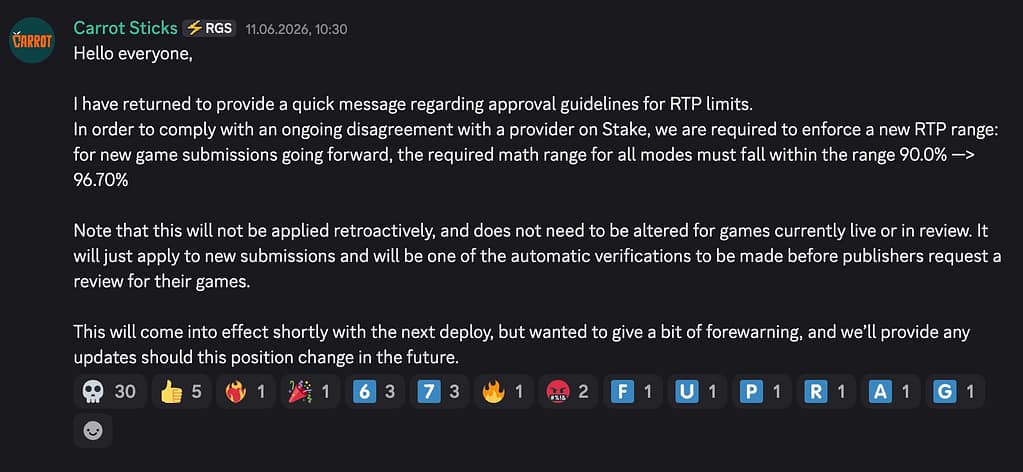
The second change, posted to the Stake Discord on June 11, concerns Return to Player (RTP) limits. All new game submissions must now fall within an RTP range of 90.0% to 96.70%. The rule is not retroactive – games already live or in review are unaffected – but it represents a notable tightening from a previous ceiling of roughly 97.9%.
According to a Twitter thread posted by gambling researcher @lated1eyoung, citing an indie developer on the platform as a source, the changes stem from ongoing friction between Pragmatic Play and Stake. The thread alleges that Pragmatic had grown frustrated with indie slots on Stake that closely mimicked its titles – same mechanics, similar visual styles, sometimes near-identical layouts – but with higher RTPs that made them more attractive to players. Pragmatic reportedly pushed Stake to stop approving such games going forward, and some titles from larger indie studios have already been removed from the platform.
For a fuller picture of how Stake Engine works, what developers actually earn, and the revenue models behind indie slots, see Stake Engine Slots: GGR Models, Earnings & Developer Insights
Streamer Boycott Emerges
The response from the indie development community has been swift. According to the same source, at least one affected studio owner – described as a known streamer with an established network – has helped organize a boycott of Pragmatic Play titles among content creators. Streamers represent a significant source of traffic and exposure for game providers, making the boycott more than a symbolic gesture.
On Twitter, the story quickly drew engagement from gambling streamers and commentators. Some expressed support for the boycott, citing broader frustrations with Pragmatic Play’s recent slot designs. Others noted the IP situation had been a long time coming, with one commenter writing that some of the copied games were “literal 1:1 copies” and it was surprising the issue hadn’t been addressed sooner.
The cumulative effect of both rule changes is a narrower lane for indie developers on Stake Engine. The IP restrictions demand more original design work, while the new RTP ceiling removes a competitive advantage that some studios had used to differentiate their products. How smaller studios adapt – and whether the streamer boycott gains meaningful traction – will be worth watching in the weeks ahead.