If you’ve been waiting on a crypto withdrawal from an online casino and it’s stuck once it hit Revolut, you didn’t necessarily do anything wrong. This is a known issue, and it happens for reasons that have very little to do with you personally. Here’s a plain-language walkthrough of why it happens, and what your realistic options are.
What Happens to Crypto Casino Withdrawals on Revolut
You request a withdrawal from the crypto casino. At this point everything is still on the casino’s side. Some process this instantly; others sit on it for hours or days. This delay alone doesn’t mean anything has gone wrong – it just means the transaction hasn’t hit the blockchain yet.
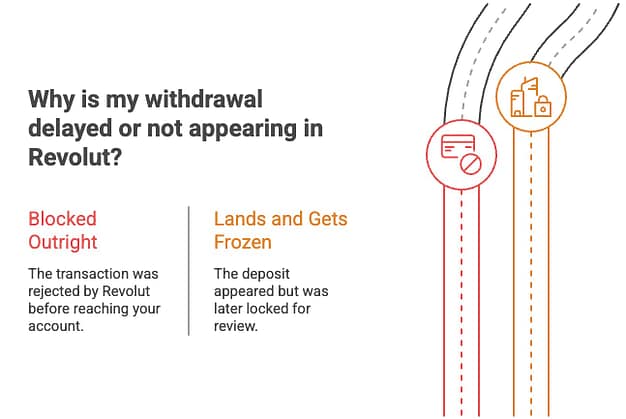
If the transaction has left the casino but you can’t see it in Revolut, one of two things is likely going on:
Rejected Outright
The transaction never reaches your Revolut deposit address as a recognized, credited deposit. This can happen if Revolut’s automated checks reject the sending address before the funds are ever added to your balance. From your side, it can look like the money just vanished, even though on a block explorer you might see the casino’s transaction went out.
Lands and Gets Frozen
The deposit shows up in your Revolut balance normally, and only afterward does it get locked. This usually means the funds passed the immediate automated checks but were caught by a slower compliance review or a subsequent flag.
This is often what “source of funds” review means in practice: Revolut wants to know the money didn’t come from something illegal, and winnings from an online casino can look exactly like something they need to check, even if nothing fraudulent happened.
Why This Happens
Legal Requirements
Revolut is legally required to block transactions to and from gambling providers in some countries, to keep unregistered operators out of the local market. Regulators publish their own lists of registered and unregistered operators, and Revolut checks payments against these lists because it has to. So if the casino you’re using isn’t registered where you live, Revolut may be obligated to block money moving between you and them – on the deposit side, the withdrawal side, or both – regardless of what payment method or currency is involved.
Crypto Can’t Just “Bounce Back” the Way a Card Payment Can
A card payment that gets declined never really lands in your account. Crypto doesn’t work that way. Once a transaction is confirmed on the blockchain, it’s final – Revolut is explicit that it cannot reverse crypto deposits or withdrawals, because they’re irreversible by design. So when a deposit from a casino gets flagged, “returning” it isn’t a simple refund – it means someone has to manually specify a new destination address and send a brand-new transaction. That someone is usually you, not Revolut, and not the casino.
How to Return a Blocked Deposit
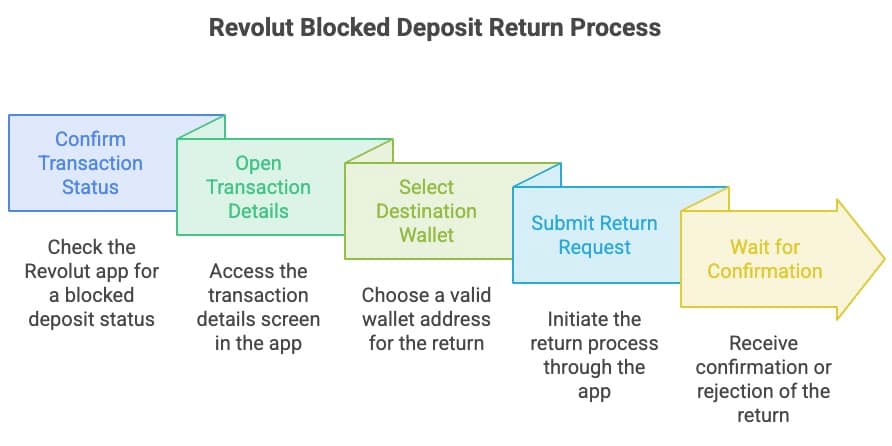
Once you figure out the deposit is actually blocked, getting it moving is a fairly mechanical process – but every step needs you to act. Revolut won’t initiate anything on its own:
- Confirm the transaction status. Go to your transactions list in the Revolut app and find the deposit in question. It will show a “rejected” status.
- Open the transaction and start the revert process. There’s typically a banner directly on the transaction detail screen that begins the revert flow.
- Select or enter a destination wallet address. This is the critical step – you (not Revolut, not the casino) choose where the funds go. The address must:
- Match the same cryptocurrency as the original deposit
- Be on the same blockchain network as the original deposit (for example, if the deposit was USDT on the TRON network, the return address also needs to be a TRON address – an Ethereum address for the same token won’t work)
- Submit the return request. Revolut runs the address through its own internal checks before anything is sent.
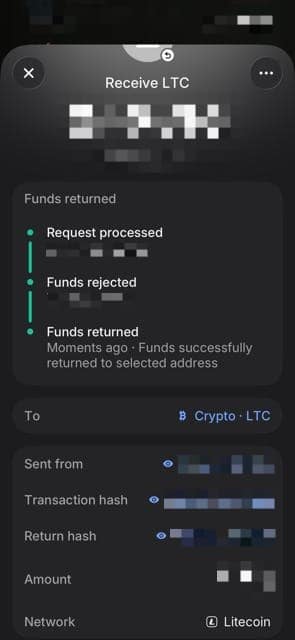
- Wait for confirmation or rejection. If the address passes checks, the return transaction is broadcast on-chain like any other withdrawal. If it fails, you’ll need to go back to step 3 with a different address.
There’s no danger to the funds here. They simply remain in place until the return process wraps up.
Which Address to Use
Getting the return address right the first time saves a round trip, so it’s worth knowing what Revolut is actually looking for:
- Match the cryptocurrency and network exactly. Every network has its own address format – a TRON address for USDT won’t work if the original deposit came in on Ethereum, and vice versa. Confirm the network from the original deposit before choosing where to send it back.
- Use an address you’ve personally verified, not one relayed secondhand. If the casino gives you a return address, get it directly from their official account dashboard or support channel, and double-check it against the network it’s meant for – not a version copied from a chat message or a third party.
- Use a fresh or actively-used address, ideally your own. An address you control and have used recently is the safest bet. Previously flagged addresses, even ones that worked before, stay flagged.
- Use an address outside of Revolut. Your own Revolut deposit address, or another Revolut customer’s, isn’t a valid destination – the funds need to go to an external wallet.
What to Do If Your Account Gets Frozen
If your account (not just the deposit) gets frozen, the process looks different – it’s less about you choosing something and more about Revolut needing information from you:
- Check your home screen for a request tile. A broader freeze usually shows up as a dedicated request on the Revolut home screen, not as a status on the individual transaction.
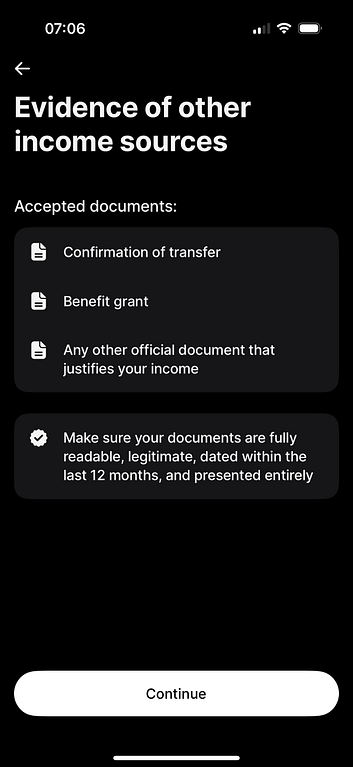
- Open the request and read exactly what’s being asked. It’s often titled something like “evidence of other income sources” – and it usually means two separate things, not one.
- Provide proof of where the original money came from. This is the part people most often miss. It’s not enough to show the casino deposit and withdrawal history – Revolut also wants to see how you had that money before you gambled with it: payslips, tax records, or statements showing the funds legitimately in your possession beforehand.
- Provide proof of the winnings themselves. Alongside that, include your betting/wagering history and deposit-withdrawal records from the casino, showing the payout is genuine winnings and not something else.
- Submit everything in the same in-app thread. Keep both pieces of documentation together in the request tile rather than splitting them across support chat or email.
The goal on Revolut’s end is to tick a compliance box, not to hold onto anyone’s money – giving them everything they need up front is what gets that box ticked fastest.
How to Reduce the Risk of Revolut Locking Your Crypto Casino Withdrawal
Most of the problems described above come from one thing: a direct, traceable link between a casino’s wallet and your Revolut account. Revolut’s compliance systems are specifically built to flag deposits arriving straight from an address associated with gambling activity, which is why casino-to-Revolut transactions get caught so often. The most effective way to avoid this friction is to break that direct link.
- Withdraw from the casino to a personal wallet you control first – not directly to Revolut. Use a wallet where you hold the private keys (a self-custody wallet), rather than sending the payout straight into Revolut.
- Deposit from your own wallet into Revolut as a standard crypto deposit. At this point, the deposit is coming from an address that’s yours, not one linked to a gambling operator, so it doesn’t carry the same automatic red flag.
- Keep your own records regardless. Save the casino withdrawal confirmation, the wallet transaction hashes, and dates at each step. This doesn’t just help if Revolut ever asks about source of funds – it’s also the proof you’d need if the intermediary wallet step itself gets questioned.
Large or unusual-looking transfers can still get flagged, even from your own wallet. A sudden six-figure deposit from a wallet with no other history looks unusual too. This approach lowers the odds of an automatic block, not the odds of any review ever happening.
If you’re holding USDT on Revolut, note that the platform is phasing it out – see our breakdown of the USDT delisting timeline and what to do before the deadline