Is Luck.io a scam? Short answer: no. Long answer: it might be the most transparent casino operating today.
Yes, the team is anonymous. Yes, they’re connected to Rollbit. Yes, they’re paying influencers astronomical sums.
But no missing funds. No unpaid winners. No rigged games. After all, that’s what players care about most.
Let’s examine the evidence, address recent controversies, and understand what makes Luck.io a legitimate online casino.
For a comprehensive overview of the platform’s features, see our full Luck.io casino review
Is Luck.io Legit?
Yes, Luck.io is legitimate based on all available evidence. Despite viral scam allegations, the platform demonstrates key indicators of legitimacy that matter for players.
- No users have reported missing funds or unpaid winnings since launch.
- The non-custodial smart contract design makes it technically impossible for the casino to steal player funds or freeze accounts.
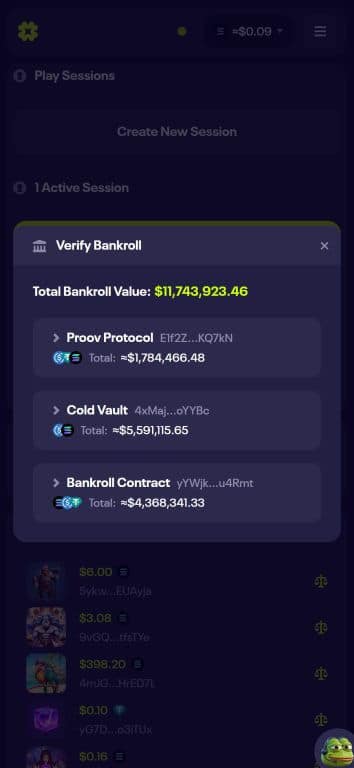
- Their transparent bankroll addresses show sufficient funds to cover all potential winnings.
- Every single game outcome can be independently verified on the blockchain through their Proov Protocol system.
- The team behind it has five years of successful operation with Rollbit, processing millions in bets without exit scamming.
- They maintain multi-million dollar bug bounties that demonstrate confidence in their security.
While the anonymous team and high marketing spend might raise eyebrows, these are standard practices in successful crypto casinos, not indicators of scam intent. The technical criticisms about audit delivery methods and VRF implementation are largely academic disputes that don’t affect the core functionality or player safety. For those ready to test the platform themselves, Luck.io bonuses can provide extra playing funds.
Bottom line: Luck.io has built a system where traditional casino scams are impossible, making it more trustworthy than many licensed operators.
Is My Money Safe on Luck.io?
The most telling sign of Luck.io’s legitimacy is what hasn’t happened – no players have come forward with credible reports of missing funds or unpaid winnings since the platform launched. In the crypto casino world where exit scams and “technical issues” regularly wipe out player balances, this clean track record speaks volumes. The reason becomes clear when you understand their non-custodial architecture.
Unlike every traditional online casino, Luck.io never actually holds your money. When you play, your funds sit in a smart contract that only your wallet can control. The casino can’t access these funds, can’t freeze them during a “security review,” and can’t invent reasons to confiscate them.
This design makes the most common casino scams technically impossible. No more “account under investigation” when you win big. No more “withdrawal pending” for weeks. No more support tickets that go nowhere while your money sits hostage. When your gaming session ends, the smart contract automatically returns your balance to your wallet. Even if Luck.io’s entire team disappeared tomorrow, the code would still execute and return your funds when the session timer expires.
Want to verify this yourself? Luck.io’s entire financial infrastructure is transparent on the Solana blockchain. You can check their Proov Protocol address, view their Cold Vault reserves, and monitor the main Bankroll Contract in real-time.
Does Luck.io Pay Out Winnings?
Since launch, there have been no credible reports of missing funds or unpaid winnings at Luck.io. The automatic payout system eliminates the traditional withdrawal problems players face at other casinos. No pending periods, no sudden KYC requirements when you win big, no locked accounts with vague explanations.
While I haven’t had the chance to try withdrawals involving the cold wallet – haven’t won that much yet – my test cashout worked automatically as promised.
Are Luck.io Games Fair?
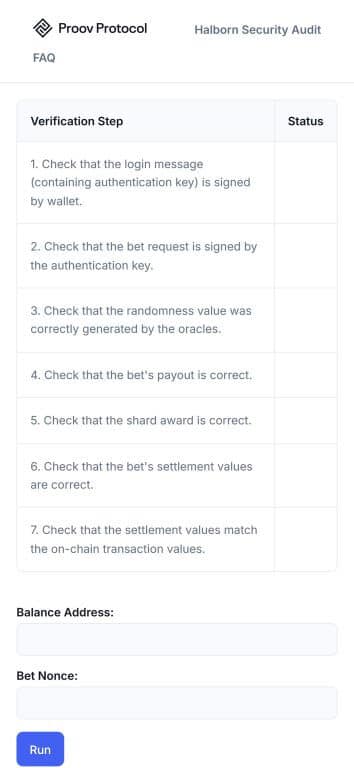
Every single game outcome at Luck.io can be independently verified on the blockchain through their Proov Protocol system. When you place any bet on Luck.io, whether it’s a slot spin or a dice roll, the system generates a unique bet ID. This ID is your key to absolute transparency. You can take this ID to proov.network enter it into their verification system, and see the complete mathematical proof of how your game result was determined.
The verification shows you everything: the signed player nonce (your unique input), the outputs from multiple independent oracles that generated the randomness, how these were combined into a final seed, and the on-chain settlement transaction. You can even download the data and run the verification locally on your own computer if you don’t trust their website.
The beauty of this system is that it makes rigging games impossible. Since every result is published on-chain and can be verified by anyone, any attempt to manipulate outcomes would be immediately visible to the entire world. The math doesn’t lie, and neither can Luck.io.
Who Is Behind Luck.io?
The team is anonymous, but we know that they’re connected to Rollbit. Luck.io has confirmed this:
“Luckio was created in collaboration by several investors with years of combined experience within the gambling industry, including Rollbit.”
This connection provides important context for evaluating their trustworthiness. Rollbit has operated since 2020, holds a Curacao gaming license, and has consistently paid winners for over five years. In the Wild West of crypto casinos, this track record is impressive.
Anonymous teams are standard in crypto – Satoshi created Bitcoin anonymously, and many successful DeFi protocols have anonymous developers. What matters is operational history, not names on LinkedIn.
For a detailed investigation into the evidence linking these two casinos, see our full report: Luck.io = Rollbit 2.0 – Proof They’re the Same Team
What Do Luck.io Scam Reports Say?
Security researcher 0xfoobar published several criticisms against Luck.io that gained traction on crypto Twitter. Let’s examine each claim:
“The Halborn audit is fake because code was delivered via email” – This is a non-issue. Halborn is a respected audit firm that verified the security of vault and payout programs. How they receive code for review doesn’t invalidate their professional assessment. Many proprietary projects use secure file transfers rather than public GitHub repositories.
“The VRF (Verifiable Random Function) isn’t real” – Luck.io uses multiple independent oracles to generate randomness, which prevents any single party from manipulating results. When a theoretical vulnerability was identified, they patched it immediately. The system works as designed and provides verifiable randomness.
“$500k monthly influencer payments are suspicious” – In context, this is standard industry practice. Stake reportedly made $4.7 billion in revenue in 2024 and pays streamers millions. Large marketing budgets indicate financial resources and growth ambitions, not scam intentions.
Another wave of criticism came from Dune Analytics dashboard misrepresenting Luck.io’s on-chain data. The circulating dashboard tracked settlements across multiple bets showing net profit/loss rather than total wagering volume, creating a misleading picture of the casino’s operations.
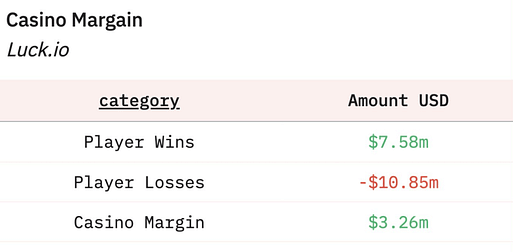
Luck.io responded with actual figures from their first month of operation: $65.29 million wagered, $3.86 million in gross gaming revenue (GGR), a theoretical RTP of 97.4%, and a realized RTP of 94.1% (slightly below theoretical due to short-term variance).
Final Verdict: Is Luck.io Legit or a Scam?
After investigating all claims and evidence, Luck.io appears to be a legitimate gambling platform pushing genuine innovation in the space. The scam allegations amount to technical disagreements and misunderstandings rather than evidence of malicious intent. No players have reported stolen funds, rigged games, or unpaid winnings.
Remember: legitimate doesn’t mean risk-free. The house edge is real and transparent. Only gamble what you can afford to lose.